Image to Video AI for Real Estate: 7 Things UAE Agents Must Know
11 min read

A single property photo used to be the beginning and end of a listing. Today, that same image can become a cinematic walkthrough that stops potential buyers mid-scroll and drives them straight to your contact form. That shift is being powered by image to video AI, and real estate agents across the UAE are only beginning to understand what it means for their business.
If you have been curious about this technology but are not sure where to start, you are in the right place. The AI video generation market is expanding rapidly, and the agents who learn to use these tools now will have a clear advantage over those who wait.
This guide covers everything a UAE-based agent needs to know as a beginner. You will learn how the technology works, why property photos are perfectly suited for AI video, which platforms deliver the best results, and how to weigh the costs against traditional production. You will also find a practical checklist for choosing the right tool, local market considerations specific to the UAE, and a step-by-step process to create your first AI property video within minutes.
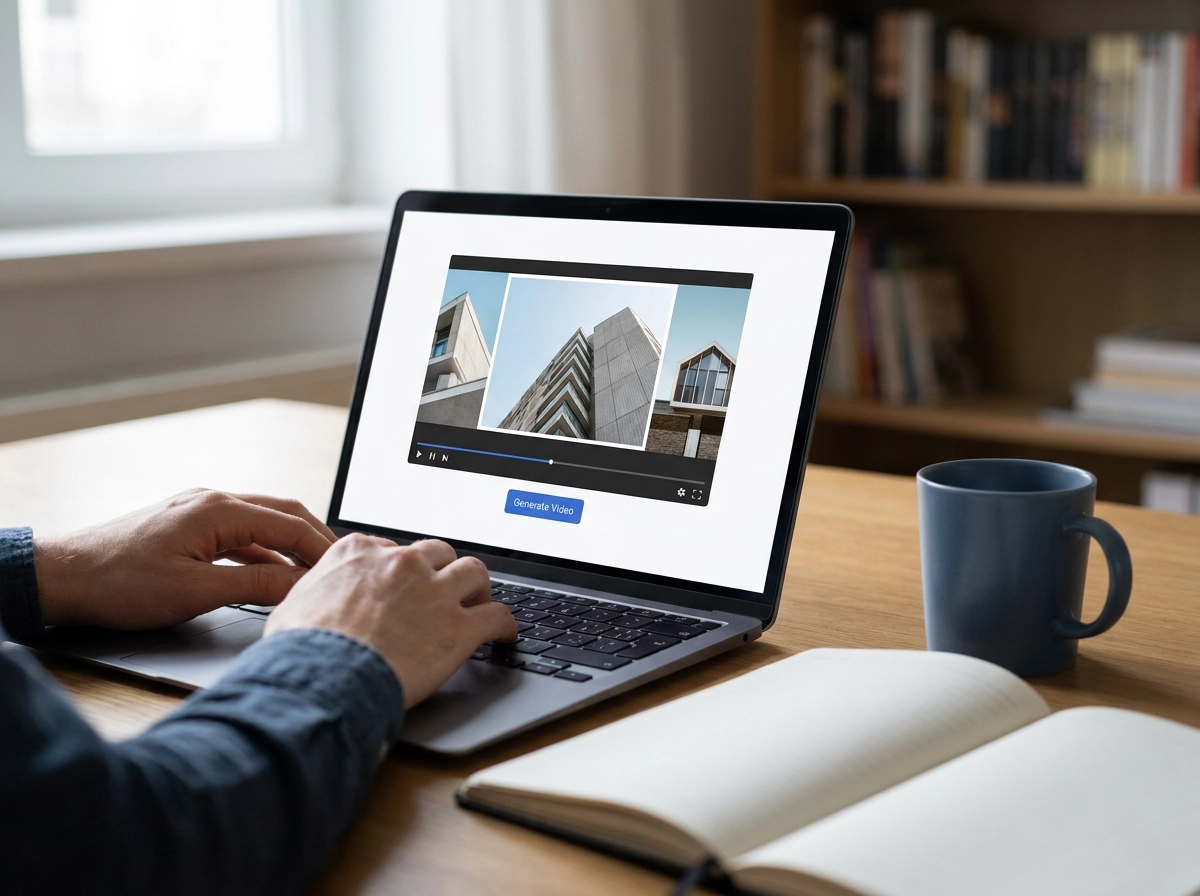
What Image to Video AI Actually Does
Image to video AI takes static property photos and automatically applies motion, transitions, and pacing to produce a cohesive video clip. No timeline editing, no keyframing, no design software required. You upload images; the platform outputs a finished video.
The technology goes well beyond a basic slideshow. Modern platforms, including EstateReels, read structured listing data such as price, location, and bedroom count to generate branded text overlays directly within the video. The result looks professionally produced, not assembled by hand.
The output format matters as much as the content. EstateReels produces native 9:16 vertical video, sized for Instagram Reels, TikTok and YouTube Shorts. Photos are framed for the vertical screen from the start, so the video fills a phone screen instead of showing a horizontal clip with black bars.
Nothing runs on your own computer, and publish-ready video comes back within minutes. Agents need no editing software installed, no high-specification laptop, and no prior video production experience.
Another difference from generic slideshow makers is room-aware sequencing. On EstateReels you label each photo by room and the video follows a logical tour order: exterior first, then living areas, bedrooms and outdoor spaces. In a Cinematic Walkthrough, the AI identifies the room in any unlabelled photo and places it in the tour for you.
Why Property Photos Are the Ideal Input for AI Video
Understanding why AI performs so well with property photos helps clarify why this technology feels almost purpose-built for real estate marketing.
Property photos are structurally different from other image types. Professional listing photography is commissioned with one goal: showcase the property's most compelling features as clearly as possible. Wide-angle interiors, facade shots, kitchen close-ups, and amenity areas follow predictable compositional conventions that give AI a consistent starting point. Event or lifestyle photography offers no such consistency. A wedding album or travel gallery presents AI with unpredictable subjects, angles, and lighting. A property gallery is, by comparison, a structured dataset.
The raw material already exists. Listing portals commonly used by UAE agents expect agents to supply multiple photos per listing before it goes live, meaning the visual assets are already prepared by the time a video is needed. There is no separate content capture step required.
Selection, not just sequence. A full listing gallery does not need to become an exhaustive clip. A video uses up to 12 photos (20 with the More photos power-up) and you choose which ones, so the result is a focused, watchable short-form video rather than an image-by-image tour. You also pick the video style that suits the listing before you order.
Professional photography earns a second return. Agents who have already invested in a professional shoot can repurpose those same images into different video styles, including the AI Twin Tour, without booking another shoot. The photography investment compounds rather than depreciates.
The Platforms Where Vertical Video Drives Real Estate Leads
Once your photos are ready, the next question is where to publish. Three platforms matter most for vertical property video in the UAE, and each works differently.
Instagram Reels can surface beyond your existing followers, which matters when you are building a local audience in a competitive market like Dubai or Abu Dhabi.
TikTok is widely used in the UAE, and property content that explains areas, prices and the buying process fits naturally into the feed.
YouTube Shorts offers something the other two do not: search. Shorts sit inside YouTube, so they can be found by buyers actively searching by location or property type, beyond social feeds.
One rule applies across all three: upload native 9:16 video directly. A horizontal video cropped to fit loses the edges of every shot and looks out of place in a full-screen feed.
Maintaining a meaningful presence across all three platforms requires consistent posting. That volume is only realistic with automation; producing videos manually quickly becomes a full-time task.
Time and Cost: AI Video vs. Traditional Property Video Production
Producing consistent video content across 10 to 20 active listings demands more than just distribution strategy. It requires a production model that can actually keep pace.
A traditional property videography shoot in Dubai involves booking a videographer, coordinating access around tenant or owner availability, and waiting a multi-day period for edited deliverables. Each listing becomes a separate scheduling exercise, and delays in production mean delays in going live.
AI video generation removes every one of those bottlenecks. Most videos are ready within minutes of ordering, with no scheduling dependency and no post-production wait. See how it works to understand the full workflow.
For an agent carrying 10 to 20 active listings at once, per-property videography costs add up quickly and vary from shoot to shoot. A credit-based AI platform replaces that variable cost with a predictable monthly outlay at a fraction of the price.
There is also a reuse advantage. The same listing photos can become a different style later, such as a Listing Slides reel at launch and an AI Twin Tour with a presenter for a price update, without another shoot.
The speed factor matters most at the critical moments: off-plan launches and new listing activations. When multiple agents are marketing the same project or building, the first to post a polished video on social media captures early inquiry volume. A multi-day production delay at that moment is a direct competitive disadvantage. With an AI workflow that delivers within minutes, that risk largely disappears.
What to Look for in an Image to Video AI Tool (Real Estate Checklist)
Choosing the right tool matters as much as adopting the technology itself. Not every image to video AI platform is built with property professionals in mind. Use this checklist before committing to any solution.
1. Real estate-specific listing data The tool should pull price, location, property type, and key features directly from a listing URL. Manual data entry for every video eliminates the time saving that makes AI worthwhile in the first place.
2. Vertical-first output at full resolution Confirm the platform exports native 9:16 video at full vertical resolution (9:16 aspect ratio). A tool that simply crops horizontal footage produces black bars or awkward centre crops that look unprofessional on Reels and TikTok feeds.
3. Brand kit customisation Your logo, brand colours, and contact details should apply across every video from a single saved profile. Redesigning each video individually adds friction and creates inconsistency across your content library.
4. Licensed music for commercial social media use Every audio track the platform provides must be fully licensed for commercial use on Instagram, TikTok, and YouTube. A copyright strike does not just mute a video; it can remove the post entirely and negatively affect your account's distribution.
5. Turnaround within minutes Automation loses its value if exports take longer than a manual edit would. A video within minutes of pasting the listing URL is the practical benchmark for a tool that fits a working agent's schedule.
6. Purpose-built for UAE property General-purpose AI video tools rarely account for the specific data fields, platform formats, or workflows UAE agents use. EstateReels is designed specifically for this market, automatically reading listing data and producing branded vertical videos ready for Reels, TikTok, and Shorts within a single workflow, without requiring any design experience.
UAE Market Considerations Every Agent Should Factor In

Choosing the right tool is only half the equation. The UAE market adds a layer of local requirements that every agent should account for before publishing AI-generated property videos.
RERA compliance is non-negotiable. Dubai's Real Estate Regulatory Authority requires properties to be accurately represented and currently available in all advertising. Any AI-generated video must reflect live listing details, including current pricing. Never publish a video for a unit that has already sold or use outdated figures.
Write captions in both Arabic and English. The UAE property market operates across two languages, and bilingual post captions extend your reach to Arabic-speaking buyers.
Video is a genuine differentiator in the off-plan segment. When dozens of agents market the same developer project simultaneously, the listing photos and floor plans are identical. A well-produced vertical video gives buyers a reason to engage with your post specifically rather than a competitor's.
Share directly via WhatsApp Business. WhatsApp is widely used for lead follow-up in the UAE. Short vertical videos shared through WhatsApp Business broadcast lists can make a stronger impression than static image shares, given the format's higher visual impact, making the format directly relevant to your existing contacts.
Verify branding requirements across emirates. Abu Dhabi, Sharjah and the Northern Emirates each have their own real estate authority rules. Check which licence, permit and contact details each authority expects on an ad, and make sure your video shows them before distribution.
How to Create Your First AI Property Video Within Minutes
With compliance and branding considerations addressed, the next step is putting it all into practice. Here is exactly how to produce your first property video with EstateReels.
Step 1: Gather your inputs
Copy the listing URL from Property Finder, Bayut or Dubizzle, or have the PDF brochure ready. If you are entering the listing manually, prepare up to 12 high-resolution photos (20 with the More photos power-up) alongside the price, location and key specifications such as bedrooms, bathrooms and floor area.
Step 2: Paste the URL or upload your photos
Open EstateReels, choose your video style, then paste the listing URL. It extracts the property details that fill the captions and, for presenter styles, the script. Manual uploads work the same way: add your photos and enter the details.
Step 3: Choose and label your photos, then add power-ups
Pick the photos for the video and label each room; the labels set the tour order. Then add any power-ups you want, such as AI Motion, Enhance Photos or Your logo. Music is chosen for you, and every video is exported as a 9:16 vertical MP4 for Instagram Reels, TikTok and YouTube Shorts.
Step 4: Confirm your details and order
Check the agent details for your closing card, review the order summary, which shows the exact credits, and confirm. There is no editing step once the video is made, so this is the moment to check everything. Most videos are ready within minutes, and you get an email and an in-app notification when yours is.
Step 5: Download and post natively
Download the finished video and upload it directly to each platform. Write platform-specific captions and add relevant hashtags targeting the Dubai or UAE property market to maximise organic reach.
First-time users can complete this entire workflow in a single session, and no video editing experience is required. Your first video is free.
The Shift to Video Is Already Happening. Here Is How to Keep Up.
With production time and cost already addressed, the strategic picture is clear: the gap between agents who post video and those who do not is widening every month.
Agents posting regular vertical video on Reels, TikTok and Shorts are building audiences and inbound enquiries that static-only agents struggle to match.
The starting point is straightforward. Pick one active listing this week, run it through EstateReels, post the result, and compare its engagement directly against a photo post of the same property. That single test will show you, with your own numbers, what video does for your listings.
Consistency compounds. One AI-generated video per listing, posted within a day of the listing going live, builds a content library and a searchable social presence over 6 to 12 months. Perfection is not the goal. Showing up, consistently, is.
Conclusion
Image to video AI is not a future trend for UAE real estate agents. It is a present advantage available right now. The seven points covered here lead to the same practical truth: better listings, stronger engagement, and lower production costs are all within reach using tools that require no prior editing experience.
The technology is ready. Your first listing is waiting.